
The Pros and Cons of Keeping Horses Like Cattle
by Nikki Alvin-Smith
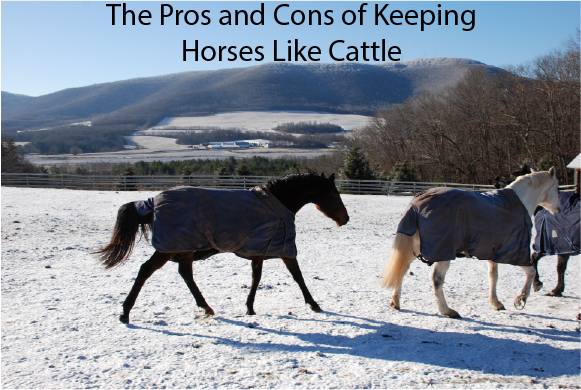
Most horse owners actively seek the very best horse friendly care environment and management practices for their equines.
In some countries the practice of raising and keeping horses like cattle is commonplace. Question is – should you embrace this method as a good option?
Like most things there are pros and cons. And also like most things, there are subtle differences in methods between horse farms that might not be readily apparent to the casual onlooker. Let’s take a look.

The Herd Dynamic
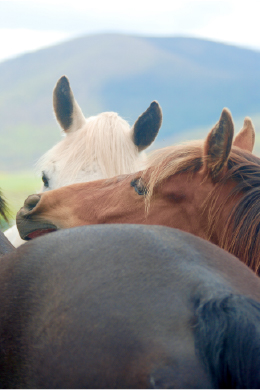
If you are keeping horses like cattle (meaning in large groups for both grazing and shelter and feeding) then the herd dynamic has to be carefully managed if you want to create a truly horse happy and horse friendly environment. The lead horse, the dominant horse, gender differences and age differences can all play into the pecking order. Depending on the nature of an individual horse and his life experiences to date, the herd lifestyle may not provide the harmony and peaceful social existence it needs for the animal to be content and stress-free.
 While allowing the pecking order to determine the hierarchy in any social gathering of animals seems a normal and rational way to let nature take its course, do so at your peril. Cows do fight things out and they do sustain injuries which are sometimes life threatening as a result of their altercations. Horses are by design more fragile than cattle, and they are also usually intended to perform some sort of task other than being raised for butchering or breeding. Pedigree herds aside where cows and horses are sometimes kept purely for breeding purposes and the most activity required of them is appearance on a lead line a few times a year, there is an intrinsic value to each individual animal based on its ability to perform.
A horse is expected to carry the weight of a rider or pull a carriage, and all equestrian disciplines require a sound animal in order to perform well. Even breeding stock in the equine world are usually bred for more than just time being used in the pedigree line-up and shown in hand. Most horses are put to work. Training wise horses that grow up and live out their lives with social interaction with other equines are generally more mentally stable to work alongside. But the management of which equine interacts with which and how herds are balanced must be on point.
While it may look to the casual outsider that horses are all banded together in random groups, the equine owner usually realizes that these groups have been carefully considered beforehand. Even horses that may have got along well together for years can suddenly begin in-fighting for what to the human eyes looks like no reason. If you’ve ever raised a horse from birth to adulthood you know that frequent challenging of the herd status-quo is all part of their growing up process. The casual half-hearted attempt to bite or nibble your jacket from a three-year old horse is not a casual gesture. Equines will constantly test their parameters. And it doesn’t stop at maturity.
Hygiene Differences
A deeply bedded large open space under a metal roofed building may seem fine for a herd of cattle or a herd of horses to meet shelter needs, the deep bedding holds a multitude of issues for horses.
Labor wise just cleaning out the building and the manure build up once or twice a year with the aid of a tractor is an attractive option. But within the interior space air quality will be poor. Even with use or passive and/or mechanical ventilation the fumes from manure and urine can overwhelm the respiratory health of any animal. Even the equine with its longer neck than the cow for protection of its lower respiratory tract, the horse is likely to suffer mucosal inflammation and even illness from poor air quality.
For performance horses this damage factor can be a huge issue and significantly diminish their overall health and well-being.
Similarly the deep bedding offers opportunity for thrush and other diseases to invade and damage the sensitive frog and laminae of the horse’s hooves and can impact hoof walls and sole surfaces making them soft and vulnerable to damage. Skin infections particularly fungal ones like sarcoids are not uncommon in horses kept in circumstances of poor hygiene. And while bloodroot or tea tree oil applications may resolve these issues, it is much better to avoid them.
Feeding Horses Like Cows
The ultimate folly when using a hay feeder for equines is to use a unit designed for cattle rather than horses. Cow feeders are usually low to the ground and invite horses to step inside and their long legs to become tangled in the metal. Halters left on horses are another recipe for injury and disaster. Breakaway halters are a must if leaving a halter on a horse anytime when at pasture and/or whenever living in a herd situation.
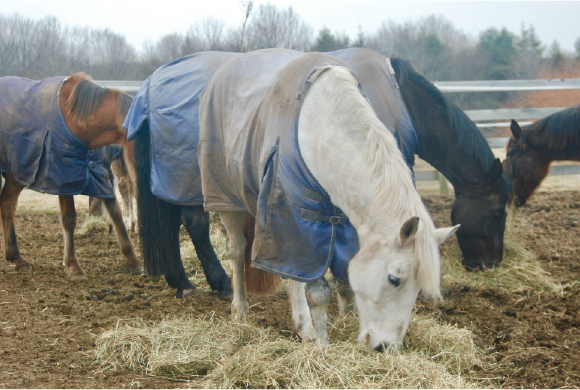
The propensity a horse has for injuring itself or becoming ill with colics, chokes or respiratory problems is often fueled by poor quality hay. Hay that is clean and green, meaning weed free and properly cured (hopefully without pickle juice or other chemical or mineral preservatives), is a must for good horse health. For forage feeders either in the ‘byre’ or outside it is best to select a product designed and constructed for horses with a roof of some sort to protect the hay from rain. Otherwise there is every likelihood that sooner or later, digestive or respiratory health issues will strike.
Horses Are More Athletic Than Cows
Adding more bedding throughout the weeks to the barn floor until ultimately the bedding litter becomes so deep the animals contained within the building are standing high looking over the fencing or gates within and on exterior walls may not present a huge hazard to cows. Horses however are much more athletic than their bovine counterparts and jumping over low fences/gates or becoming hung up in or over the same are situations that are much more likely to be prevalent at a horse farm than a cow farm.
Necks and legs of horses are less dense and at risk for injury particularly where horses are fed through low feeders. A horse pawing in frustration at its inability to reach the forage beyond the feeder may result in legs becoming trapped in the grill of the feeder. A horse that quickly snatches its head back within the confines of the corral during feeding time is much more likely to injure an eye than a cow.
Horses by nature are simply flightier than cows and more athletic and fast in their responses to stimuli like noise or another horse acting up behind them or in their vicinity.
Horses Are Generally More Expensive
Cows that are bred strictly for meat production are obviously always headed for slaughter. Cows that are bred for breeding sales and to improve the quality of the stock will also be sent to the abattoir if they become unfit for show and/or can no longer function in the breeding shed. Dairy cows are obviously bred for milk production, but even they will finish their days at the slaughter house once their breeding lifecycle and thus potential for milk production ceases. There is almost always a means to recover some of the costs of the cow during ownership. Losses do of course occur too, but the initial investment in a particular animal are usually less than that spent on an average horse.
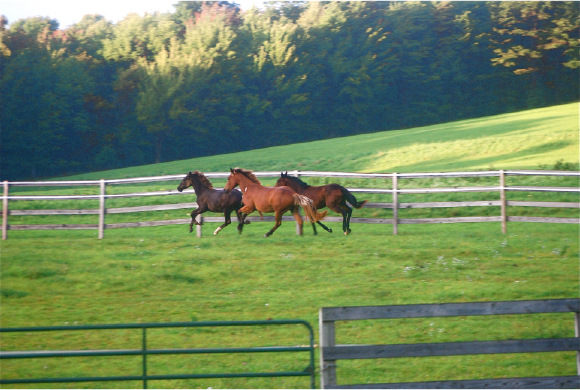
As horses are generally more expensive to buy than cows protecting their fragile digestive systems and from themselves and their uncanny ability to sustain injury becomes more poignant. Horses are also often pets, their owners building very strong partnerships with them over time. That is not to say farmers don’t also build strong relationships with their animals because they certainly do, and loss of any animal is hard for all, but the one-on-one training put into a horse versus a cow is usually significantly more complex. Thus horses are not just more expensive dollar-wise but also emotional investment in them is high making any loss expensive.
Horses also require other more regular attentions than cows for health consideration like foot care.
Take Home Message
While the local rescue may group horses and keep them in large social groups either through necessity of space available or time limitations for labor costs remember many of these equines have already been retired for one reason or another from an active performance activity. If you are seriously considering adopting the practice of keeping horses like cattle and herding them in and out of large open plan sheds and allowing them access to big pastures en masse, be aware that lack of handling of horses especially youngsters can result in much difficulty working with them later.
Having said that it can be extremely beneficial to raise foals and their mom’s together in groups for social development of the youngsters. Cross-parenting is an important part of the mental well-being equation for mares and foals.
You cannot put a horse in a cattle crush to vaccinate it or stitch an injured leg, or to trim its feet. Horses in the wild that sustain certain injuries may die, or at best repair to some degree that allows them to hobble about. The immense size of the terrains wild horses have to graze and to travel for forage often helps keep their hooves trimmed naturally so farrier care is not as necessary.
It is wise to take a hard look at everything that is planned to be placed in the horse’s environment, including feeder set ups, fencing
(no barbed wire please), and of course, their herd divisions. Constant supervision and evaluations are necessary in the care of any animal, and just keeping a large group of horses together with freedom of access to water/feed and shelter is not quite as simple and cheap a solution to horse care as it might first appear.