


Should You Take Your Horse Barn Self-Service?
By Nikki Alvin-Smith
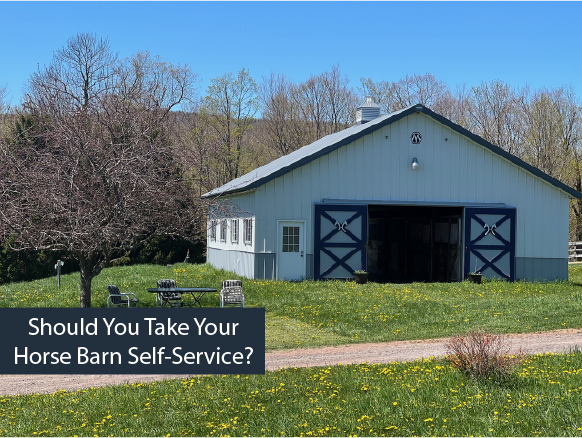
The increasing costs and responsibilities of operating a full-service horse barn are having a detrimental effect on the prevalence of horse facilities across the country. Whether the horse property has been developed as a private training facility for performance horses, a horse-breeding activity or an educational PATH therapeutic riding center or lesson barn, the issues that operators face are the same. Is the labor of love that operating a horse barn truly is, worth all the aggro?
 The high-end barn operators and backyard horse owners are managing reasonably well, and barn ownership is still a fabulous enterprise. Agri-tourism business is a growing marketplace for equine aficionados to capture in the U.S. just as their European counterparts have already proved, and there are many ways to make good money from farm ownership. However, being able to pivot your horse barn operation can still be a good idea, and there can be times when it becomes necessary. Even if temporarily.
When wearing my hat as an advanced level dressage clinician I am increasingly having conversations with my hosts discussing the difficulties they are having keeping the lights on. Between huge increases in insurance costs, the general horse owning populace’s personal financial difficulties due to economic pressures of their own, and the tough job of finding qualified labor, the horse business is taking it on the chin right now. Just as many other small, family run businesses are.
Take heart, there is another option – consider taking your horse property to a self-service equestrian format. Many horse aficionados are dropping the intensive lifestyle and long hours that managing a full-service horse barn entails to take this different approach to horse ownership.
Consider Shelving Responsibilities
The incumbent responsibility that comes with owning a horse facility or small horse-oriented property is often a complex one that includes managing the well-being of horses alongside their owners. But that is not all, it also includes resourcing supplies that are often expensive and hard to obtain; providing labor for high maintenance needs for fencing, horse-housing structures, pastures, paddocks and arenas; meeting safety, security and insurance needs and much more.
Management of horse care can easily reach critical mass, the equine being a sensitive creature, both mentally as a flight animal and physically too, prone to colic, injury and disease.
When the opportunity exists to shelve those onerous responsibilities and leave what hay to order, daily mucking out chores and pasture manure pick up and the general day-to-day work that comes along with horse ownership to others, why not take it?
What is the Self-Service Horse Barn Market?
The self-service horse barn is coming of age for several reasons. There is an increasing need for horse housing for horse owners in suburban and urban areas that seek the emotional and physical health rewards of equine ownership. Commonly affordability of the land and stabling required for such an enterprise is limited for many ‘wannabee’ horse owners, and livery is a good option.
There is a bonus factor of a self-service barn beyond its affordability and the horse owner themselves taking individual care of their equine partner on a daily basis. In a self-service barn social circumstances exist for interaction with other like-minded individuals. A community where each person can enjoy their own horse, within the framework of other horse-oriented personages that can aid in their enjoyment and education. A bit like the community garden experience – mental and physical health can all be optimized by spending time being active and around nature and of course, around horses.
For property owners that are considering retirement from horse ownership or reducing their equine-based operations, or simply cutting back for financial, time-management or pivoting lifestyle reasons, there is often a reluctance to leave the horse property they call home and abandon their passion for horses. The notion of changing the barn from full-service offering or a private yard to a ‘self-service’ model with a mix of rough and partial boarding options can be a valuable source of both money and emotional reward.
Dairy farmers and farmers in general are rapidly going out of business. Sadly a trend set to continue given the problematic issues that they face across the board. For these families that have land that they have held dear through generations, the idea of keeping it in the agricultural realm are very real. Advocates for farm and open land conservation have their hands full. For farmers, making a change from keeping cows and cattle to offering existing barns and pastures as a self-service horse facility can make a lot of sense.
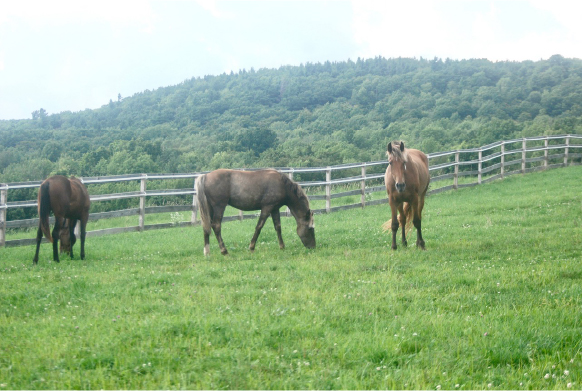
Farms are often sold for development. And sometimes the new property buyer that enjoys the privacy large acreage can provide for their residence are often baffled by what to do to best manage the open land they have acquired. Very often tracts of land may be purchased with a view to building a nice home but not with a view to how the land itself can be utilized either for income production or simply as an idyllic quiet vista they can enjoy from a distance.
These folks that have property that is currently doing nothing but becoming overgrown and unkempt are also opting for taking their farm to a self-service equestrian option. Their philanthropic intent being to provide something useful to the community in the process, while keeping their custom farming expenses down.
Notes For Successful Set-Up of a Self-Service Horse Barn
Here are a few tips to help successfully setup or transition your horse barn for the self-service option:
· Start with a decently maintained property that offers good ingress/egress and security with gates and safe fencing in place.
· Build or renovate the barn to offer a well-ventilated and sturdy horse living environment. Designs that encapsulate horse-friendly lifestyles also mean less labor.
· Provide secure, water-proof storage for horse supplies that the horse owners will obtain for their use such as hay, bedding, tools, tack and equipment. Mitigate fire risks by ensuring hay is properly cured to avoid likelihood of spontaneous combustion and make each person responsible for securing their own preferred supplies. A small storage shed, a group of shed-row style barns or run-in sheds planted centrally on the property for access, all make great double-duty structures for both horse use and supply storage.
· Ensure a clean and fresh water supply is available all year around, including during cold winter months. Do not use roof run-off to barrels, as it can easily be contaminated.
· Set up a program for manure removal.
· Add a simple remote security system to help protect your assets and include automatic lighting features for additional security.
· Follow local ordinances for fire prevention.
· Maintain the correct type of insurance to protect you from liability claims and property damage.
· Ensure a clearly written contract be executed for each user and detail whether insurance coverage for their horse against death/injury or disease is required; terms of property use including hours and visitor rules; pricing and payment terms; determine care requirements for use of specific areas such as stalls/paddocks and mucking out etc.; include cancellation or eviction terms. Make sure to take a deposit to be held against property damage, as a means to protect fences/barns/other buildings on the property. It is all too easy to back a long horse trailer into the eave of a barn.
· Post any user rules (riding helmet requirement when mounted/dress codes like no open-toed footwear etc.) or liability notices in high viz area.
Learn To Say No
You will always encounter Difficult Horses and Difficult Boarders so be smart about how you handle them and who you let in to use your facility. Don’t be afraid to say No to rogue behavior on the part of either horse or human.
If you include a contract requirement for the horse owner to visit and care for their horse a certain number of times per week/day etc., you can protect not just the horse’s well-being but save your property from becoming a parking lot for horses that for one reason or another are no longer wanted as riding partners or companion animals.
Don’t Be Afraid To Mention
Whatever the age/breed/gender mix of horses that will be on property have a clear directive about individual versus group turnouts and carefully consider which horses will be neighbors or pasture-mates. If possible you may assign a particular person that is experienced with horses as unofficially in charge to aid in supervising activities.
Take Home Message
Whether you are transitioning due to a lifestyle change either medically necessary or by choice or realizing your dream of land conservation and home ownership, or something in between, the self-service barn can alleviate a lot of headaches and responsibilities while allowing you to either stay on property or live elsewhere and rent it out.
Either option requires regular supervision of the property to ensure that rules are being followed and that everyone is discharging their duties to care for the horses present in a responsible manner.
All Rights Reserved. Copyright ©2025 N. Alvin-Smith - Author