


Is Your Horse Barn Built Weather Safe?
By Nikki Alvin-Smith
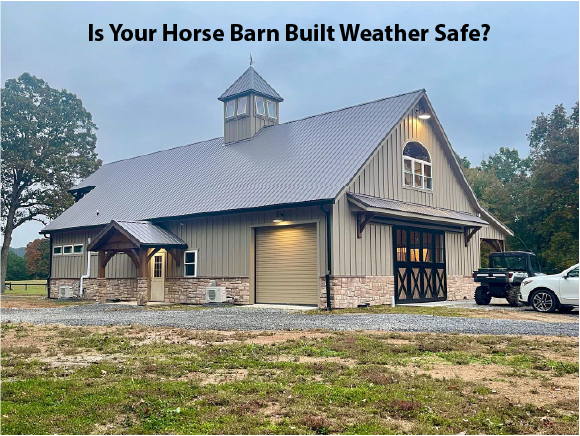
A horse barn needs to offer safe and secure shelter to its equine residents in every type of weather. Durable exterior finishes, sturdy building techniques and well-engineered designs that are followed are all essential components of the construction if the structure is to last the test of time.
Sadly, in an effort to save money or perhaps due to lack of understanding or complete ignorance of basic building methods many horse barns do not meet a decent standard of craftsmanship. Sometimes the builder has simply cut corners to make more profit off the innocent property owner.
Nefarious business practices sadly do exist. While the residential construction market is relatively well-regulated and rules of law enforced, the agricultural market is often subject to zero regulation in rural areas. This can leave property owners vulnerable to malpractice on the part of contractors.
The time most horse owners discover shortcomings in the build of their horse structures comes during an onslaught of inclement weather. Major and catastrophic damages can occur such as roof collapse under heavy snowloads; wind lift causing a roof to blow off; flooding that separates the barn from its concrete foundations; barn entrance doors flying off their tracks or being lifted off the wall in high winds; and the list goes on.
Have A Plan And Stick To It
While building plans are not always required by the local building inspector if no permit is required, there is an onus on a licensed and insured contractor to do their due diligence when it comes to following certain protocols. Trouble is, how do you know how good a barn building plan is and how safe the ultimate structure will be when finished.
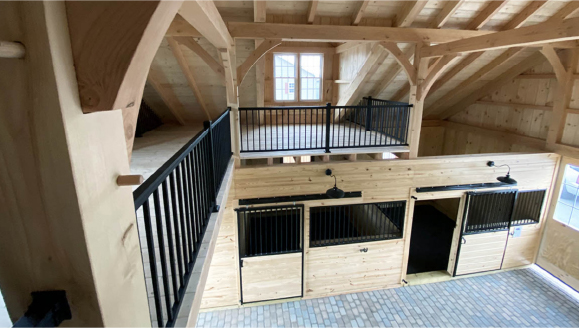
Thankfully, the advent of the modular barn building option provides a nationwide resource that horse owners can utilize where the plans are readily drafted and provided to the property owner before any contracts are signed. Where the details of everything from fixtures and fittings to major factors such as roofing and structural framing member configuration and joinery methods are evidenced.
Things To Look For As A Neophyte Barn Buyer
Essential factors in the building plans such as wind and snow load compliance to local standardized practices can easily be verified by asking a structural engineer to certify the plan and regardless of whether a building permit is required or not, the local building inspector will likely be more than happy to come out to the site and validate the plans are being followed.
Making sense of building plans is actually not that difficult to accomplish. Even though they can appear technical once you get into them they are very straighforward to read and understand. Knowing what you need to worry about to ensure all facets are included that matter for a particular region or climate is something else to learn. But some basic due diligence can significantly improve your knowledge. Check out this short read article on How to Make Sense of Barn Building Plans.
Key Touch Points
The key touch points to consider aside from structural integrity for wind and snow load include hurricane ties and needs. In this article, Hurricanes Hardly Ever Happen, you can get the scoop on major component parts that should be included for structural integrity in construction projects in hurricane prone areas.
It’s not just major features like adding hurricane ties to exterior framing between floors and between trusses and the like. Any high wind gust, sustained or not, can rip a sliding entrance door from its moorings.
During my travels to various barns as a dressage clinician I often encounter the ‘brand new barn’ that has been competently built but which leaves me baffled about poor quality final finishes and errant locations of plumbing and the like.
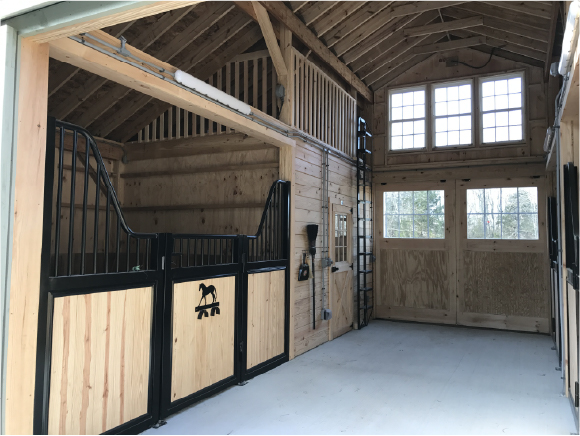
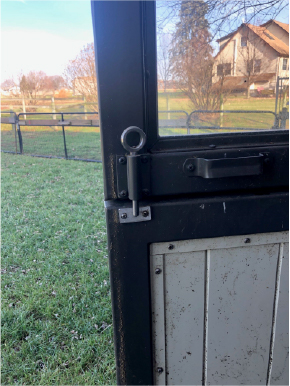 It is no good having a Dutch door on an exterior stall wall that has no secure provision to tie back. Similarly the big entrance doors may appear strong and made of metal, but they can soon lift off in high winds like big sails if they do not have a secure bolt down system. And this system is not just interior and exterior means of locking them together in the center. But also grounding them to the floor in the center and locking them down on side walls from inside. And also importantly, having a bar or bolt or means of keeping them back when fully open so they don’t move.
The way a door locks down is also important. A metal hook designed to hold in or latch a big entrance door needs to do more than hook through onto a thin metal door panel on the inside. Under pressure that panel will bend, the hole will become filled with dirt and ultimately likely rust and weaken, and the repeated punishing push and pull of the wind will bend the hook.
Windows shutters look great as decorative additions to a long blank wall of stall windows on the exterior of the barn. But whether operational or not they must be secured properly to their framing and the wall.
Doors should all be on tracks that are buffered at both ends to ensure they do not overshoot their tracks top and/or bottom. And exterior door tracks should always have a cover to protect them from rain, snow and ice.
Water is a force of nature to be reckoned with also. Regardless of how temperamental the weather may be in your ‘patch’, the reality is that those so called ‘one-hundred-year flood plains’ or flash flood zones are increasingly overcome with excess water on a much more regular basis then perhaps expected historically.
It is important to pay attention to where the barn is sited and its aspect as far as wind, elevation and geology of the soil and subsurface layers beneath it. Here is a quick read Geography 101 to help you figure out best practices. Even the humble run-in shed needs to be properly sited.
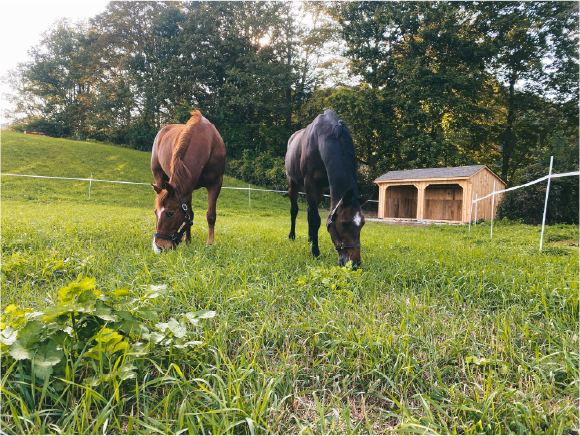
And don’t forget the aspects of freeze and thaw on the ground and flooring materials in the building. While you likely are already aware that water service lines will need to be buried to depths below the local frost and freeze levels, a lack of site preparation for any structure can ruin the pleasure of its daily use with constant lift of the ground.
Central lock down fittings for doorways, even post supports for doors and walls can lift during freezing weather as the moisture in the soil surface around them freezes making stall and entrance doors stick and lift against their tracks making them difficult to open. A well-compacted, well- drained base for the barn with any pillar support dug in to sufficient depths should also be included in the building plans.
What You Don’t Know Can Hurt You
Be careful who you take advice from in barn build and design. A well-meaning friend may suggest or social media post may offer advice from their perspective or experience and all is good fodder to consider. But making big mistakes like allowing a contractor to substitute materials or not being aware they are even doing so and not thinking far enough ahead in planning your barn design are more common occurrences than you might think.
Even big spend barns are subject to oversights and shortcuts if you are not paying attention. While this article focuses on building a barn that is durable and offers longevity there are design aspects that are similarly important to rate.
Always plan ahead in design. Even strongly built aspects of barn construction can provide an issue if wrongly situated or designed. For example: If you expect to house young horses or operate a breeding program or keep high energy performance horses then don’t use low front European stall designs or standard height exterior Dutch doors for large warmblood breeds that invite youngsters and rearing/playful equines an opportunity to injure themselves hooking a pastern over a front door when rearing or attempting to jump out.
Yes, there is a lot to know about barn building. Take professional advice from a reputable company that has extensive experience working with horses and that evidences an ability to provide designs founded on proof of concept and proven experience to deliver. As in many major purchases, the best option is not always going to be the cheapest or the most locally.
